

Puberty is the transitional phase of growth and development when a child’s body matures into an adult body capable of sexual reproduction. This process is driven by a complex cascade of hormonalchanges initiated by the brain, leading to significant physical, physiological, and emotional transformations.
Here is a detailed breakdown of how puberty works, its stages, and the changes that occur in both biological males and females.
The Biological Trigger: How Puberty Starts
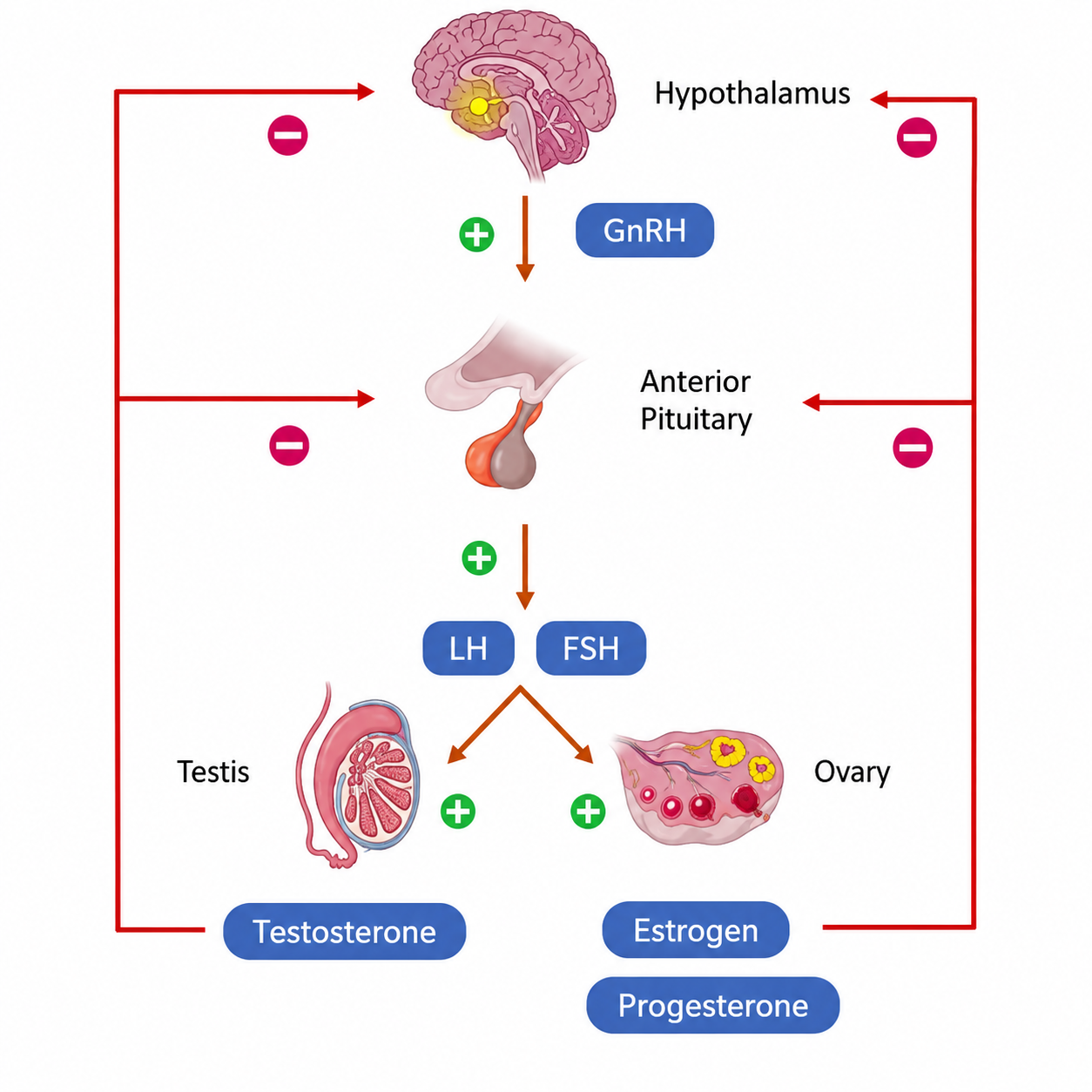
Puberty doesn’t start in the reproductive organs; it starts in the brain. The process is governed by the Hypothalamic-Pituitary-Gonadal (HPG) axis:
- The Hypothalamus (a region of the brain) begins releasing GnRH (Gonadotropin-Releasing Hormone) in pulses.
- GnRH signals the Pituitary Gland, a pea-sized gland at the base of the brain, to release two crucial hormones: LH (Luteinizing Hormone) and FSH (Follicle-Stimulating Hormone).
- LH and FSH travel through the bloodstream to the Gonads (testes in males, ovaries in females):
- In males, the testes are stimulated to produce Testosterone.
- In females, the ovaries are stimulated to produce Estrogen and Progesterone.
The Five Stages of Puberty (The Tanner Stages)
Clinically, doctors track the progression of puberty using the Tanner Scale, which divides physical development into five distinct stages.
- Stage 1 (Pre-pubertal): No visible physical changes. The HPG axis is just beginning to wake up.
- Stage 2 (The Start): The first physical signs appear. In females, this is breast budding. In males, it is the enlargement of the testes and scrotum. Sparse pubic hair begins to grow.
- Stage 3 (The Growth Spurt): Physical changes accelerate. Pubic hair becomes coarser and darker. Voice changes may begin in males. A rapid increase in height occurs.
- Stage 4 (Maturation): Development is well underway. In females, menarche (the first menstrual period) typically occurs. In males, the penis increases in size and the voice deepens permanently.
- Stage 5 (Adult): Full physical and reproductive maturity is reached. Growth plates in the bones close, ending height gain.
Physical Changes During Puberty
While some changes are universal, others are specific to biological sex.
Universal Changes
(Both Males and Females)
- Growth Spurt: A rapid increase in height and weight. Skeletal growth accelerates significantly.
- Skin Changes: Sebaceous (oil) glands become more active, often leading to acne.
- Body Odor: Apocrine sweat glands mature, particularly in the armpits and groin, producing a stronger body odor.
- Body Hair: Growth of pubic hair, underarm hair, and leg hair.
Changes Specific to Females (Typically begins between ages 8–13)
- Breast Development (Thelarche): Usually the very first sign of female puberty.
- Body Shape Shift: Fat deposits increase around the hips, thighs, and buttocks, widening the pelvis.
- Menstruation (Menarche): The onset of the menstrual cycle, typically occurring about 2 to 2.5 years after breast development begins. Initial cycles are often irregular.
Changes Specific to Males (Typically begins between ages 9–14)
- Testicular and Penile Growth: The enlargement of the testes is the first definitive sign of male puberty.
- Voice Deepening: The larynx (voice box) grows, and the vocal cords thicken, causing the voice to “crack” and permanently drop in pitch.
- Muscle and Skeletal Development: Shoulders widen, and lean muscle mass increases substantially due to high testosterone levels.
- Facial and Chest Hair: Hair begins to grow on the upper lip, chin, and eventually the cheeks and chest.
- Spermarche: The beginning of sperm production, often marked by nocturnal emissions (“wet dreams”).
Psychological and Emotional Changes
The massive influx of sex hormones profoundly affects brain development, particularly the limbic system (responsible for emotions) and the prefrontal cortex (responsible for decision-making and impulse control).
- Mood Fluctuations: Rapid changes in hormone levels can cause sudden shifts in mood, irritability, or heightened emotional sensitivity.
- Identity and Independence: A growing desire for autonomy from parents and an increased focus on peer relationships and social fitting.
- Sexual Awareness: The emergence of sexual attraction, romantic interests, and a developing awareness of sexual identity.
Factors Influencing Timing
The exact age puberty begins varies widely based on:
- Genetics: The timing often mirrors when a child’s parents went through puberty.
- Nutrition and Health: Overall health and body mass index (BMI) play a role; a certain percentage of body fat is necessary for the brain to trigger female puberty.
- Environmental Factors: Chronic stress or exposure to certain endocrine-disrupting chemicals can sometimes influence timing.
Note: If signs of puberty appear before age 8 in girls or age 9 in boys, it is considered Precocious Puberty. Conversely, if no signs are present by age 13 in girls or age 14 in boys, it is evaluated as Delayed Puberty.
