
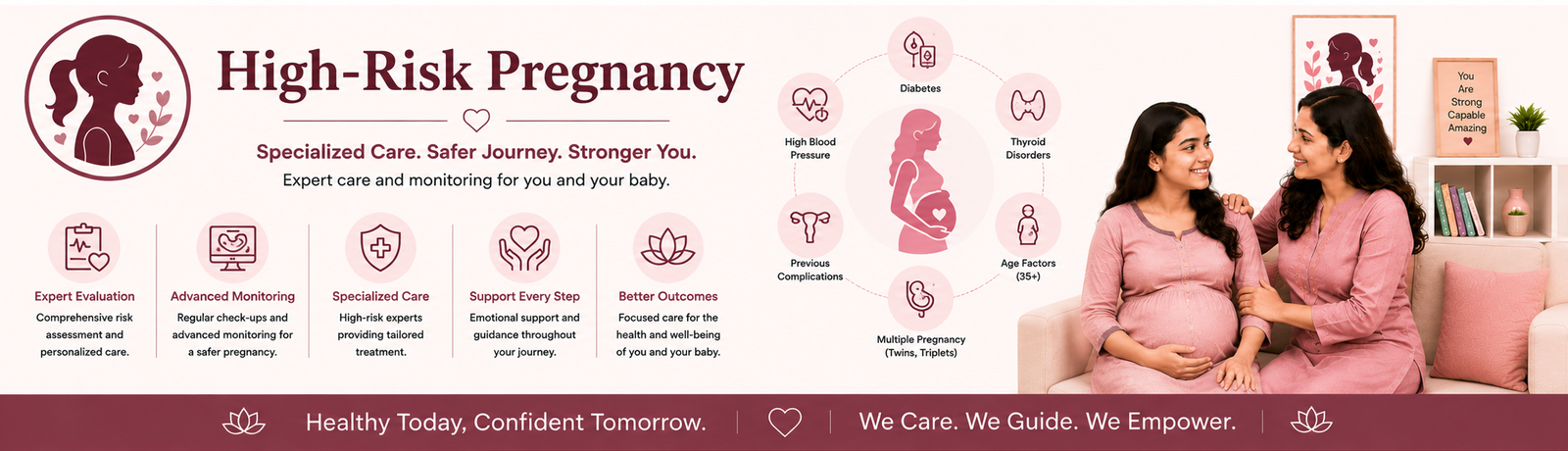
High-Risk Pregnancy
High-risk pregnancy is a condition in which there is a serious risk to the health of the mother or the unborn baby. Such pregnancies require closer monitoring, more investigations, and sometimes specialized medical treatment compared to normal pregnancies.
The causes responsible for high-risk pregnancy can mainly be divided into the following categories:
1. Pre-existing Medical Conditions
If the mother already has certain diseases before conception, they may create risks during pregnancy:
- Diabetes: High blood sugar levels may cause congenital abnormalities or excessive birth weight in the baby.
- High Blood Pressure: This may affect the kidneys and interfere with the baby’s growth.
- Heart or Kidney Disease: Pregnancy increases the workload on the heart and kidneys, leading to increased risk.
- Thyroid Disorders: Hormonal imbalance may lead to miscarriage.
- Lung Diseases: Problems such as Tuberculosis (TB).
- Psychiatric Illnesses: Any type of mental health disorder.
- Neurological Disorders: Conditions such as epilepsy (seizures).
- Infections: Viral hepatitis, malaria, or HIV infection.
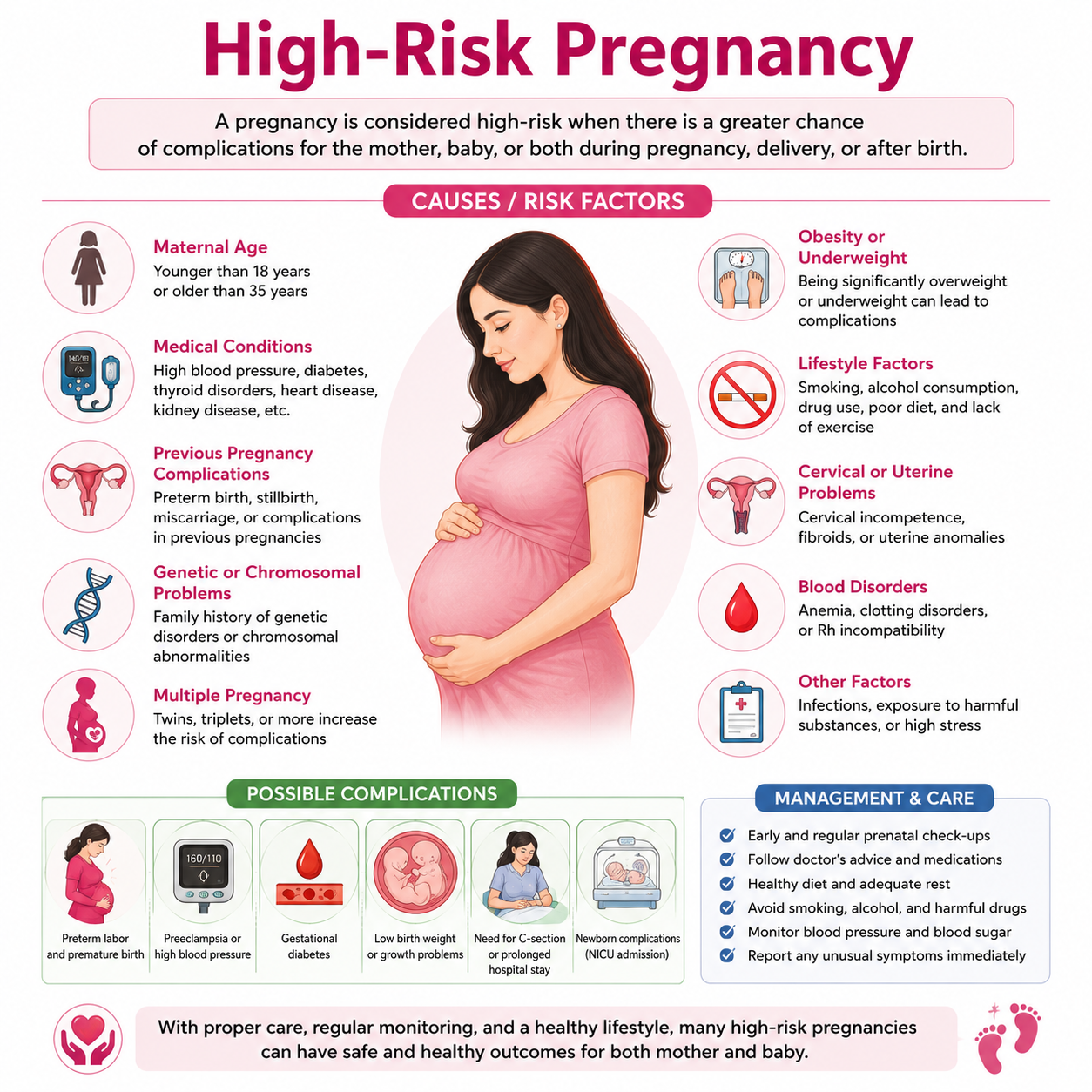
2. Reproductive History
- Previous Miscarriages: If the mother has had two or more miscarriages previously, there is a higher risk of recurrent miscarriage or preterm delivery.
- Previous Child Loss: History of stillbirth, neonatal death, or birth of a baby with congenital abnormalities.
- Growth-related Problems: Previous history of preterm birth, Intrauterine Growth Restriction (IUGR), or delivery of a macrosomic (very large) baby.
- Uterine Condition: Previous cesarean section or uterine surgery (Hysterotomy).
- Postpartum Hemorrhage (PPH): Previous excessive bleeding after delivery increases the risk of recurrence.
- Rh Incompatibility: If the mother’s blood group is Rh-negative and the father’s is Rh-positive, complications may occur in future pregnancies.
3. Problems Developing During Pregnancy
The following conditions increase the risk during pregnancy:
- Other Serious Conditions: High blood pressure and anemia.
- Abnormal Uterine Size: The uterus being disproportionately small or large according to the stage of pregnancy.
- Genital Prolapse: Downward displacement of reproductive organs such as the uterus.
- Cervical Injury or Dilatation: Old tears, injuries, or abnormal opening of the cervix.
- Associated Tumors: Tumors related to reproductive organs, such as fibroids.
- Pelvic Inadequacy: Abnormal pelvic bone structure causing difficulty in vaginal delivery.
Some complications arise only after pregnancy begins:
- Preeclampsia: Sudden rise in blood pressure with protein in urine during pregnancy. This condition can be dangerous for both mother and baby.
- Gestational Diabetes: Diabetes that develops only during pregnancy.
- Placental Problems: Placenta previa (placenta lying low in the uterus) or premature separation of the placenta.
4. Age-related Factors
- Pregnancy at a Young Age: Pregnancy below 18 years is risky because the body may not be fully developed.
- Pregnancy at Advanced Age: Pregnancy after 35 years increases the risk of hypertension, diabetes, and genetic abnormalities in the baby.
5. Past Medical and Obstetric History
- Previous miscarriage.
- Previous cesarean delivery or preterm birth.
- Obesity: Excessive body weight can lead to complications during delivery.
- Multiple Pregnancy: Carrying twins or more increases the risk of preterm labor.
- Poor Nutrition: Anemia due to iron deficiency is also a major cause of high-risk pregnancy.
Warning Signs in High-Risk Pregnancy
If a pregnant woman experiences any of the following symptoms, immediate medical consultation is necessary:
- Vaginal bleeding.
- Watery discharge from the vagina without labor pains
- Severe headache or blurred vision.
- Sudden swelling of hands, feet, or face.
- Reduced fetal movements.
- Persistent and severe abdominal pain.
- Shortness of breath (panting)
- fever occurring within one month after delivery
High-risk pregnancy does not necessarily mean that the outcome will be poor. With timely diagnosis, regular sonography, and proper medical guidance, safe delivery is possible.
6. Previous Surgery
If the mother has undergone the following surgeries previously, it may affect the mother or baby during pregnancy:
- Myomectomy: Surgery to remove uterine fibroids.
- Perineal Tear Repair: Repair of severe tear or injury during previous delivery.
- Vesicovaginal Fistula Repair: Surgery for abnormal communication between the urinary bladder and vagina.
Stress Incontinence Surgery: Operation performed for urinary incontinence.
7. Family and Social History
- Socioeconomic Status: Women from economically weaker sections are at higher risk of anemia, preterm delivery, and low birth weight babies.
- Family History: Family history of diabetes, hypertension, twin pregnancy, or congenital abnormalities.
