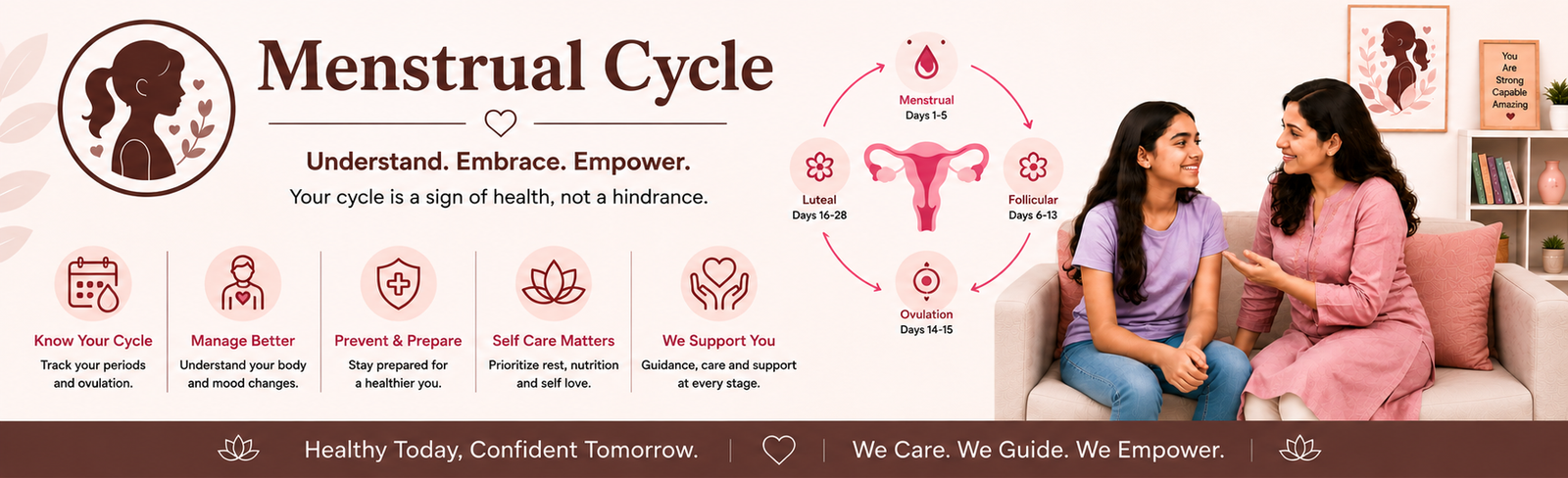
The menstrual cycle is a natural, biological process occurring in a woman’s body every month to prepare for potential pregnancy. While a cycle typically lasts 28 to 30 days, a range of 21 to 35 days is considered normal.
Onset of Menstruation
The beginning of the menstrual cycle, known as menarche, typically occurs between the ages of 10 and 15, with most girls starting their periods around age 12 or 13. Several factors influence this timing:
Heredity: Family history, such as the age at which a mother or elder sister began their periods, plays a significant role.
Geography: In warmer climates (like Gujarat), there is a tendency for menstruation to begin slightly earlier.
Lifestyle and Diet: Nutritious food and physical activity help balance hormones; conversely, high consumption of junk food and weight fluctuations can lead to earlier onset, sometimes as young as 8 or 9 years old.
Body Build: A child’s height and weight also influence the timing of puberty.
Important Considerations
Early Signs: Physical changes, such as breast development and the growth of underarm or pubic hair, typically appear 1 to 2 years before the first period.
Irregularity: It is normal for periods to be irregular for the first 1–2 years; they may occur every 2–3 months instead of monthly.
When to Consult a Doctor: Seek medical advice if a girl has not started her period by age 15 or 16, or if menstruation begins before the age of 8.
Main Stages of the Menstrual Cycle
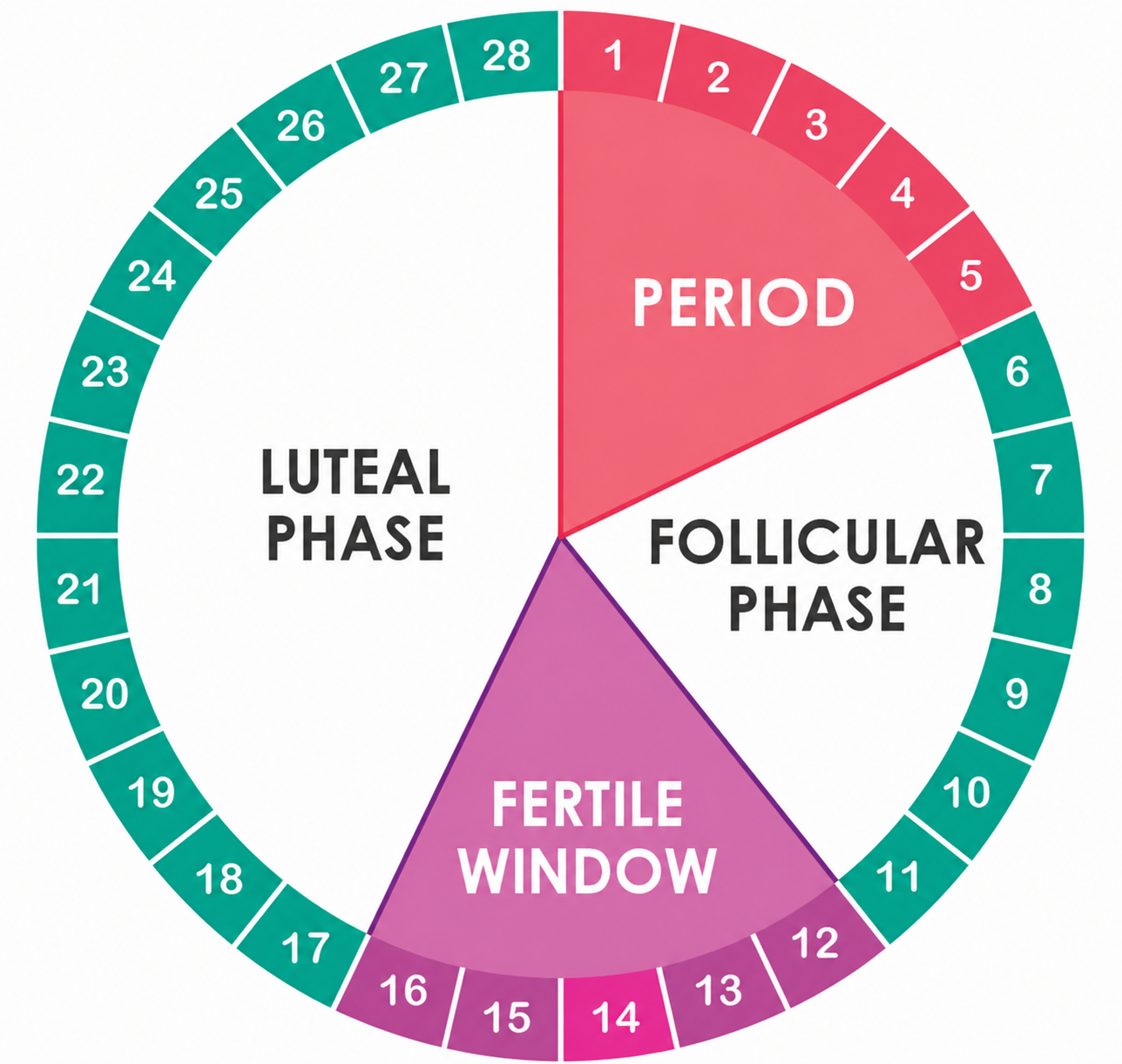
Menstrual Phase (Days 1–5): When pregnancy does not occur, the uterine lining (endometrium) sheds and leaves the body as menstrual blood, commonly called “periods.”
Follicular Phase (Days 6–14): After menstruation, the body prepares for a new cycle. The pituitary gland releases FSH (Follicle-Stimulating Hormone), which helps develop eggs in the ovaries, while the uterine lining begins to thicken.
Ovulation (Around Day 14): This is the most critical stage. A mature egg is released from the ovary into the fallopian tube. This “fertile window” (Days 12-16) is the best time for conception, as the egg remains viable for only 12 to 24 hours.
Luteal Phase (Days 16–28): If the egg is not fertilized, progesterone levels drop, causing the uterine lining to break down and setting the stage for the next cycle.
Menstruation continues until menopause, which typically occurs between ages 45 and 55. In India, the average age for permanent cessation of periods is between 47 and 50.
Common Concerns and Precautions
PMS (Pre-Menstrual Syndrome): Symptoms like mood swings, breast tenderness, or bloating may occur before periods begin.
Hygiene: Change sanitary pads every 4 to 6 hours to prevent infection.
If the cycle is shorter than 21 days or longer than 35 days.
If there is excessively heavy bleeding.
If there is unbearable pain that interferes with daily activities.
If menstruation becomes significantly irregular.
The menstrual cycle is a vital indicator of a woman’s health, and keeping track of it is highly recommended.
Note: If signs of puberty appear before age 8 in girls or age 9 in boys, it is considered Precocious Puberty. Conversely, if no signs are present by age 13 in girls or age 14 in boys, it is evaluated as Delayed Puberty.