
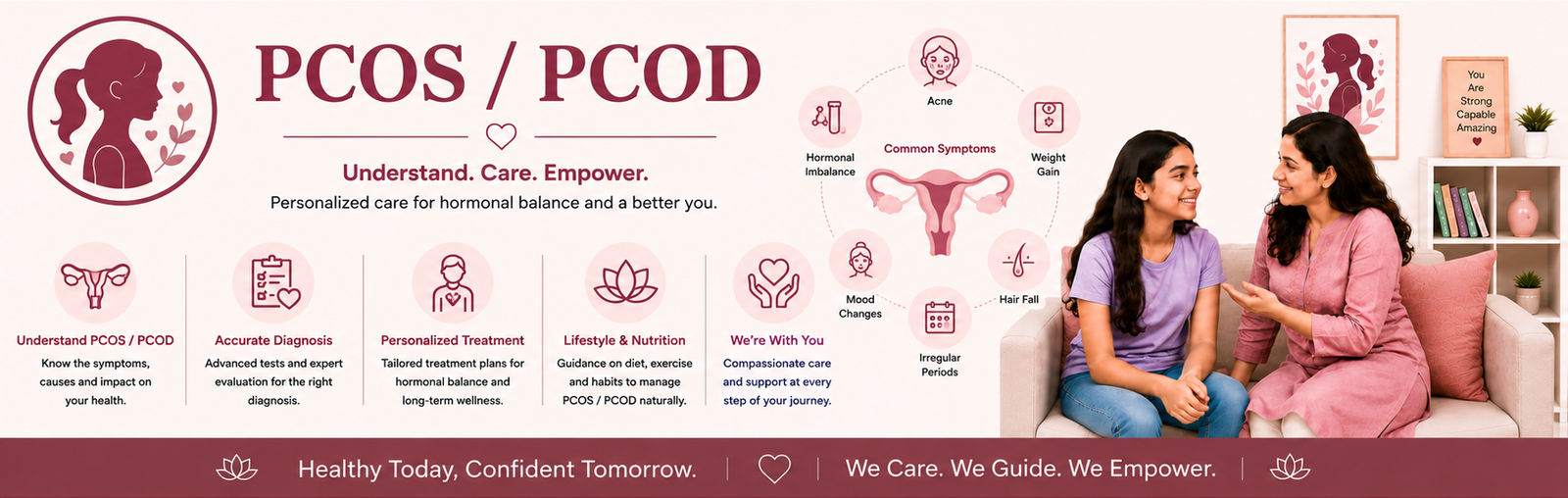
PCOD (Polycystic Ovarian Disease) and PCOS (Polycystic Ovarian Syndrome) are very common problems related to women’s reproductive organs and hormones. Today about 1–2 out of every 10 women are seen with this condition. Many people consider both the same, but medically there is an important difference between them.
Below is a complete scientific and medical explanation:
What are PCOD and PCOS? (Main difference)
PCOD (Polycystic Ovarian Disease):
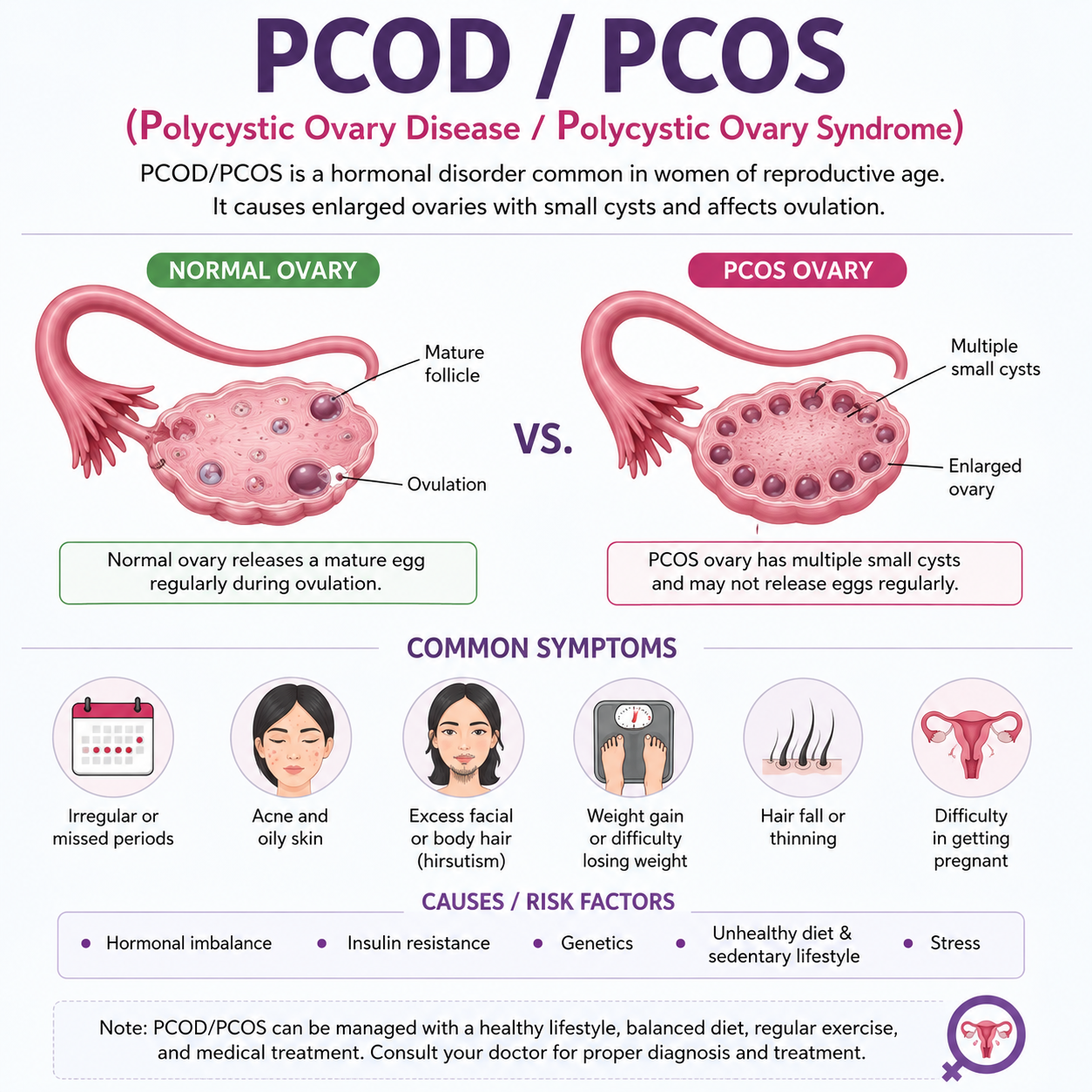
- This is a common medical condition. Due to hormonal imbalance, the ovaries release a large number of immature or partially mature eggs over time. These eggs can form small fluid-filled sacs (cysts) in the ovaries.
- Characteristic: It is not extremely serious. With proper diet and lifestyle changes it can be managed easily. It does not usually have a very large effect on a woman’s fertility.
PCOS (Polycystic Ovarian Syndrome):
- This is not limited to the ovaries; it is a more serious endocrine-system disorder. The ovaries produce excess male hormones (androgens).
- As a result, ovulation (the process of egg formation and release) can stop completely.
- Characteristic: PCOS affects the whole body’s metabolism, can cause difficulty conceiving (infertility), and increases future risks of diabetes and heart disease.
Main symptoms
A woman with PCOD or PCOS may show the following signs:
- Irregular periods: Periods may be very delayed (not occurring for two–three months), or bleeding may be very light or very heavy.
- Weight gain: Especially rapid fat accumulation around the abdomen and difficulty losing weight.
- Facial hair (Hirsutism): Due to increased male hormones, unwanted coarse hair grows on the face, chest, or back.
- Acne & hair problems: Severe acne, thinning or brittleness of scalp hair.
- Acanthosis nigricans: Darkening and thickening of skin around the neck, armpits, or groin (due to insulin resistance).
- Mood changes: Increased anxiety, stress, and depression.
Major causes
There is not one single cause; the condition is mainly related to:
- Sedentary lifestyle: Sitting most of the day, lack of physical activity, irregular sleep.
- Poor diet: Junk food, packaged foods, high sugar and refined-carbohydrate intake.
- Insulin resistance: When the body cannot use insulin properly, blood insulin rises and stimulates the ovaries to make more androgens (male hormones).
- Genetics: Family history (mother, sister, aunt) increases risk.
Diagnosis
Doctors typically diagnose using three methods:
- Pelvic ultrasound: Ovaries may appear enlarged with many small cysts on the rim (often described in reports as a “string of pearls”).
- Blood tests (hormone profile): Levels of LH, FSH, testosterone, prolactin, and thyroid are checked.
- Sugar tests: Fasting blood sugar and HbA1c to assess insulin levels and glucose metabolism.
Treatment and management
There is no single “cure” pill, but with about 70% lifestyle changes and 30% medical treatment, PCOD/PCOS can be well controlled:
Lifestyle and diet changes (most important):
- Weight control: Losing just 5–10% of body weight can help regularize the menstrual cycle.
- Diet: Prefer high-fiber, low-carbohydrate diet. Increase vegetables, fruits, legumes, and whole grains (e.g., millets, sorghum, oats). Avoid sugar, sweets, refined flour, fast food, and soft drinks.
- Regular exercise: At least 30–45 minutes of brisk walking, yoga (e.g., sun salutations, butterfly pose), or cardio daily.
Medical treatments (drugs):
- Your gynecologist prescribes medicines based on symptoms:
- To regulate periods: Hormonal pills (oral contraceptive pills) if cycles are very irregular.
- To control insulin: Drugs like metformin to reduce insulin resistance and help with weight loss.
- For conception (fertility treatment): If pregnancy is desired, ovulation induction medications are used to stimulate timely egg release.
Remember: There is no need to fear PCOD or PCOS. With proper diet, regular exercise, and a low-stress lifestyle, these conditions can be managed effectively and a normal life can be led.
