
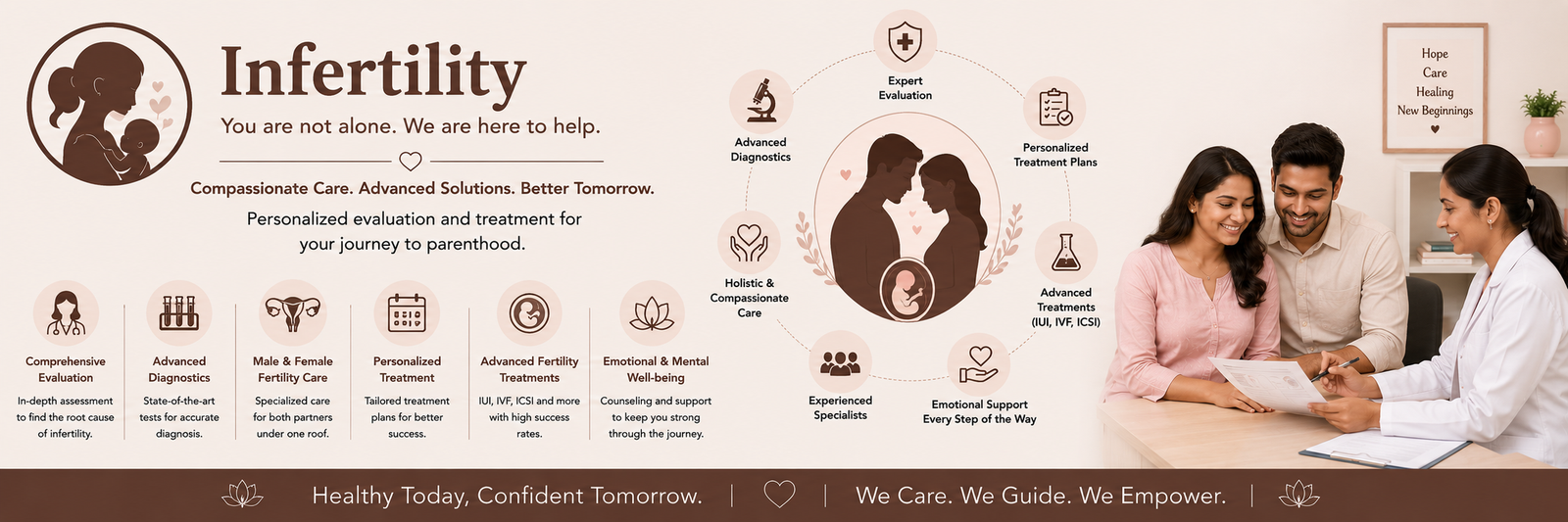
Infertility refers to a condition where a couple is unable to conceive (achieve pregnancy) after 1 year or more of regular, unprotected sexual intercourse.
With changing modern lifestyles, this issue has become increasingly common. There is a frequent misconception that infertility is solely a female problem; however, scientific data shows that male and female factors contribute equally to reproductive challenges.
1. Primary vs. Secondary Infertility
- Primary Infertility: This refers to couples who have never achieved a pregnancy and are facing difficulties conceiving their first child.
- Secondary Infertility: This occurs when a couple has successfully conceived at least once in the past (resulting in a live birth or a miscarriage) but is now facing difficulties conceiving again.
2. Causes of Female Infertility
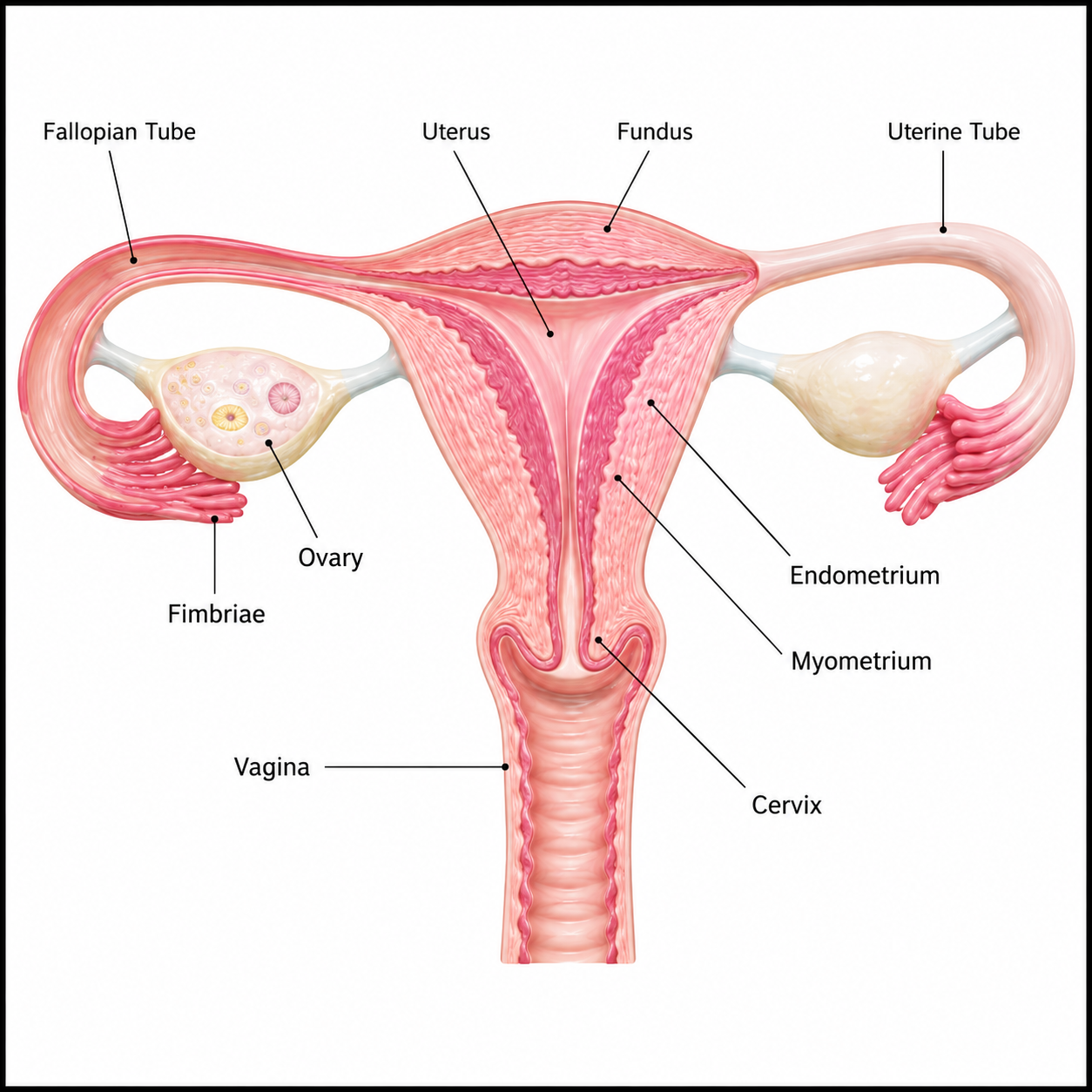
For a woman to conceive naturally, her ovaries must produce healthy eggs regularly, her fallopian tubes must be open, and her uterus must be healthy enough to support an embryo. Disruptions in any of these areas can cause infertility:
A. Ovulatory Disorders (Issues with Egg Production)
• PCOS/PCOD (Polycystic Ovarian Syndrome/Disease): Hormonal imbalances prevent eggs from maturing properly inside the ovaries, leading to irregular or absent ovulation.
• Thyroid or Prolactin Disorders: Imbalances in thyroid hormones or elevated prolactin levels can disrupt the menstrual cycle and halt ovulation.
B. Tubal Blockage (Damage to Fallopian Tubes)
• If the fallopian tubes are blocked or damaged (often due to pelvic inflammatory disease, infections, or tuberculosis), sperm cannot travel to meet and fertilize the egg.
C. Uterine and Cervical Factors
• Uterine Fibroids: Non-cancerous tumors inside the uterine wall that can interfere with implantation of the fertilized egg.
• Endometriosis: A condition where tissue similar to the uterine lining grows outside the uterus (such as on the ovaries or fallopian tubes), causing inflammation, scarring, and chocolate cysts.
D. Age
• A woman’s age is a crucial factor. After the age of 35, both the quantity and genetic quality of her remaining eggs decline rapidly.
3. Causes of Male Infertility
Causes of Male Infertility
Male factors are solely responsible for approximately 40% of all infertility cases. These primarily revolve around sperm production and delivery:
A. Sperm Abnormalities
• Oligospermia (Low Sperm Count): Having fewer than 15 million sperm per milliliter of semen.
• Asthenozoospermia (Low Motility): Sperm lack the strength or swimming ability needed to reach and fertilize the egg.
• Azoospermia (Zero Sperm Count): Complete absence of sperm in the ejaculated semen.
B. Varicocele
• Enlargement of the veins within the scrotum, increasing testicular temperature and impairing healthy sperm production.
C. Hormonal Imbalances
• Low testosterone levels or disruptions in pituitary hormones that regulate sperm production.
D. Environmental and Lifestyle Factors
• Excessive smoking, heavy alcohol consumption, chronic stress, obesity, and prolonged exposure to high temperatures can significantly reduce sperm quality.
4. Diagnostic Tests
When evaluating a couple, reproductive specialists conduct tests for both partners simultaneously:
For Men:
- Semen Analysis: The most vital baseline test. It evaluates semen volume, sperm count, motility (swimming ability), and morphology (shape).
For Women:
- Pelvic Ultrasound: To check the structure of the uterus, ovaries, and to count developing follicles.
- Hormonal Blood Profiles: Tests including AMH (Anti-Müllerian Hormone) to check ovarian reserve (egg supply), along with FSH, LH, Thyroid, and Prolactin.
- Hysterosalpingography (HSG): A specialized X-ray procedure where a contrast dye is gently injected into the uterus to verify whether the fallopian tubes are open or blocked.
5. Modern Treatment Options
Treatment Options for Infertility
Medical advancements have made managing and overcoming infertility highly successful:
A. Ovulation Induction (Medications)
• Oral medications or hormone injections help stimulate the ovaries to mature and release healthy eggs in women with irregular ovulation.
B. IUI (Intrauterine Insemination)
• Prepared and concentrated healthy sperm are placed directly into the uterus around the time of ovulation, improving the chances of fertilization. This is effective for mild male-factor infertility and unexplained infertility.
C. IVF (In Vitro Fertilization – “Test Tube Baby”)
• Eggs are retrieved from the ovaries and fertilized with sperm in a laboratory. The resulting healthy embryo is then transferred into the uterus for implantation.
D. Reproductive Surgery
• Laparoscopic or hysteroscopic procedures can remove fibroids, treat endometriosis, or repair varicoceles to improve fertility.
Lifestyle Modifications
• Maintaining a healthy BMI, exercising regularly, eating a balanced diet, avoiding smoking and alcohol, and managing stress can significantly improve fertility and support natural conception.
