
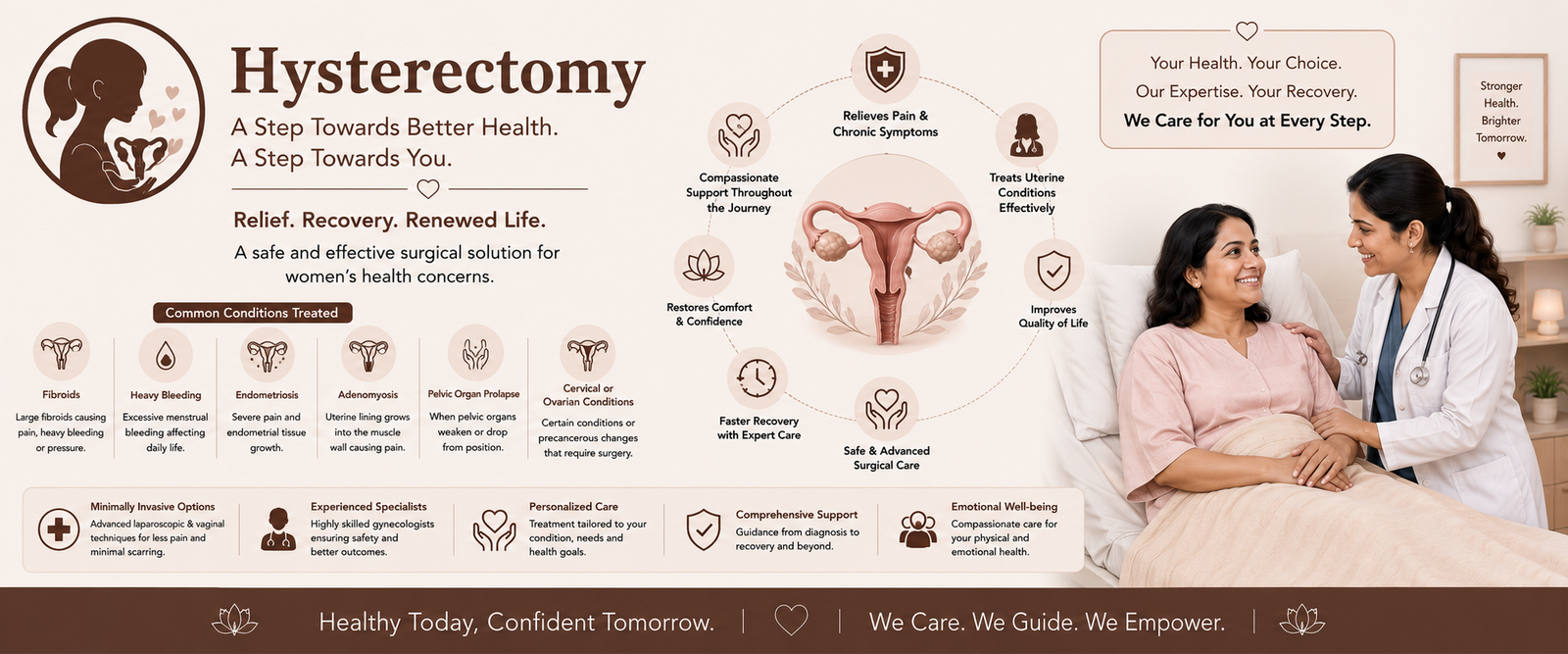
Hysterectomy is a major surgical procedure performed to remove a woman’s uterus (womb). Once a hysterectomy is performed, a woman can no longer become pregnant, and her menstrual cycles (periods) will stop permanently. It is one of the most common gynecological surgeries performed globally
1. Why is a Hysterectomy Performed? (Main Indications)
Gynecologists generally recommend a hysterectomy only when non-surgical treatments—such as medications, hormonal therapies, or less invasive procedures—have failed to provide relief. The most common reasons include:
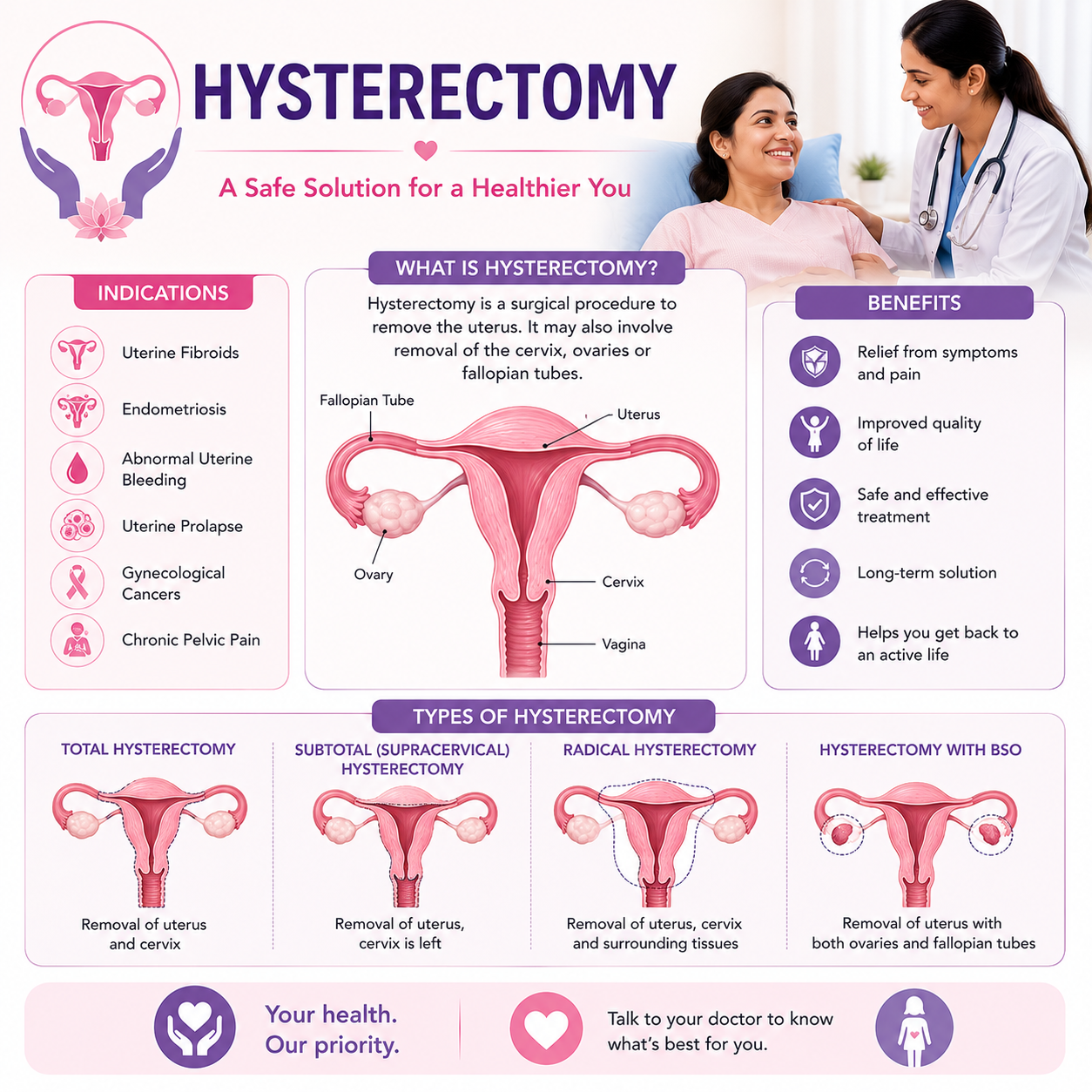
- Uterine Fibroids: These are very common, non-cancerous (benign) tumors inside the muscular wall of the uterus that cause chronic pain, pressure, and severe, prolonged menstrual bleeding.
- Abnormal Uterine Bleeding (AUB): Heavy, irregular, or prolonged periods that do not respond to hormonal medications and cause severe anemia.
- Uterine Prolapse: A condition where the pelvic floor muscles and ligaments stretch and weaken, causing the uterus to slip down out of its normal position into the vaginal canal.
- Endometriosis and Adenomyosis: Conditions where tissue similar to the uterine lining grows outside the uterus (endometriosis) or deep into its muscular wall (adenomyosis), causing excruciating pain and heavy bleeding.
- Gynecological Cancers: If cancer develops in the uterus (endometrial cancer), cervix, or ovaries, a hysterectomy becomes a critical, life-saving necessity.
2. Types of Hysterectomy
Depending on the underlying medical condition, a surgeon will determine how much of the reproductive system needs to be removed:
- Partial (Subtotal) Hysterectomy: The surgeon removes only the upper portion of the uterus, leaving the cervix completely intact.
- Total Hysterectomy: This is the most common type. The surgeon removes the entire uterus, including the cervix.
- Radical Hysterectomy: Usually reserved for cancer cases. The surgeon removes the entire uterus, cervix, fallopian tubes, ovaries, the upper portion of the vagina, and adjacent pelvic lymph nodes.
Crucial Note on the Ovaries: If a woman has not reached natural menopause, doctors try to preserve healthy ovaries during a hysterectomy. This ensures the body continues to produce essential female hormones like estrogen naturally. If both ovaries are surgically removed (Oophorectomy), the woman will instantly enter Surgical Menopause, regardless of her age.
3. Surgical Approaches (How the Operation is Done)
A hysterectomy can be performed using different surgical techniques depending on the size of the uterus and the reason for the surgery:
- Abdominal Hysterectomy (Open Surgery): The surgeon removes the uterus through a large incision (horizontal or vertical) made in the lower abdomen. This approach is preferred if the uterus is exceptionally large, or if widespread cancer or severe scar tissue is present. It requires a hospital stay of a few days and a longer recovery time (6 to 8 weeks).
- Vaginal Hysterectomy: The entire uterus is removed through a small incision made inside the vaginal canal. There are no visible external scars on the abdomen. This is highly preferred for uterine prolapse. It offers a shorter hospital stay and faster recovery.
- Laparoscopic Hysterectomy (Keyhole Surgery): The surgeon inserts a laparoscope (a thin tube with a camera) and specialized surgical instruments through 3 to 4 tiny incisions in the abdomen. The uterus is cut into smaller pieces and removed through the incisions or the vagina. This technique results in minimal pain, minimal scarring, a lower risk of infection, and a rapid recovery.
4. Post-Surgery Recovery and Care
Recovering from a hysterectomy takes time, and following post-operative guidelines is essential to prevent complications:
- Adequate Rest: Avoid strenuous physical activities, climbing excessive stairs, or rushing back to work. Recovery typically spans 4 to 6 weeks depending on the surgical method.
- No Heavy Lifting: Do not lift grocery bags, heavy buckets, or children for at least 6 to 8 weeks to prevent internal stitches from tearing or causing a hernia.
- Dietary Changes: Eat a high-fiber diet rich in fresh fruits, vegetables, and whole grains, and drink plenty of water. This prevents constipation, as straining during bowel movements can put dangerous pressure on pelvic stitches.
- Avoid Sexual Intercourse: Do not insert anything into the vagina (including tampons) and strictly avoid sexual intercourse for at least 6 to 8 weeks to allow the vaginal cuff to heal completely.
Potential Long-Term Side Effects
If the ovaries were removed during the procedure, the sudden drop in estrogen levels will induce immediate menopausal symptoms. These can include:
- Hot Flashes and Night Sweats: Sudden waves of heat and heavy sweating.
- Vaginal Dryness: Leading to discomfort during intercourse.
- Mood Modifications: Increased anxiety, irritability, or mood swings.
- Osteoporosis: Over the years, the lack of estrogen accelerates bone density loss, increasing the risk of bone fractures.
In such scenarios, doctors often evaluate the patient for Hormone Replacement Therapy (HRT) to safely manage symptoms and protect bone health.
