Book Appointment   +91 814 173 7376
Language :

Menopause

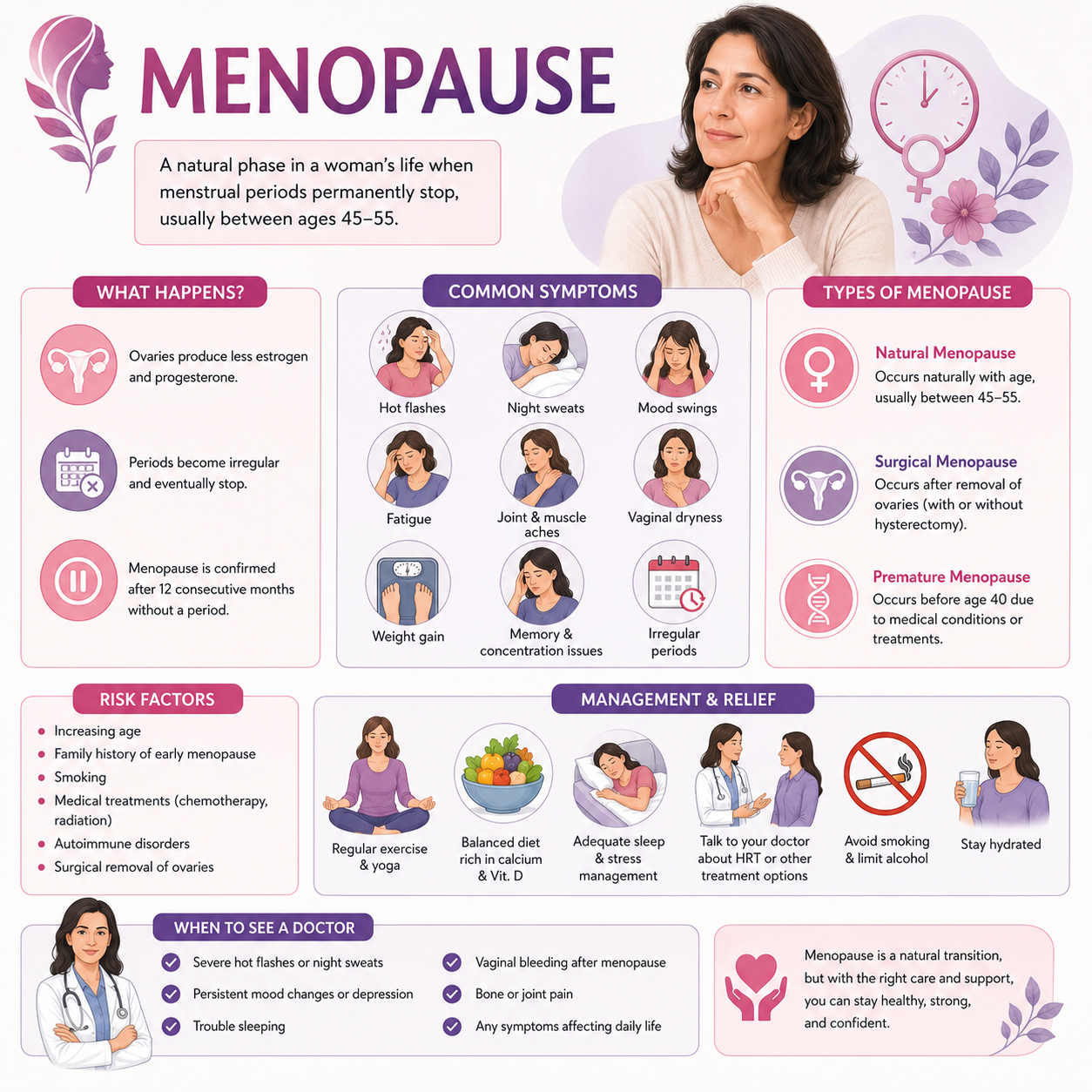
Menopause is the natural, biological process in which a woman’s menstrual periods permanently stop. It is not a disease, but an important life stage that marks the end of reproductive capacity.

Below is a complete scientific and medical explanation:

1. At What Age Does Menopause Occur?
• Menopause usually occurs between 45–55 years, with the average age in Indian women being 47–50 years.
• It is confirmed after 12 consecutive months without a menstrual period.

2. Three Stages of Menopause

Perimenopause: 3–5 years before menopause; periods become irregular as hormone levels change.

Menopause: Occurs when a woman has gone 12 months without a period; the ovaries stop releasing eggs.

Postmenopause: The years after menopause; hormones stabilize, but some health risks may increase.

3. Symptoms of menopause (bodily changes)

Because estrogen and progesterone levels fall, women experience physical and psychological changes:
Physical symptoms:

  • Hot flashes: Sudden intense warmth in the face, neck, and chest, facial flushing, and heavy sweating (often at night).
  • Sleep problems (insomnia): Night sweats and hormonal changes can disrupt sleep.
  • Vaginal dryness: Reduced estrogen thins and dries the vaginal lining, which may cause pain during intercourse or increase infection risk.
  • Changes to skin and hair: Skin becomes drier and hair may thin or become brittle.
  • Weight gain: Metabolism slows and fat tends to accumulate, especially around the abdomen.

Psychological and emotional symptoms:

  • Mood swings: Sudden anger, irritability, or crying spells.
  • Depression and anxiety: Feelings of anxiety or depressive symptoms may arise without an obvious cause.
  • Memory and concentration problems: Difficulty focusing or forgetting small things.

4. Health risks after menopause

Estrogen has protective effects on the heart and bones. With its decline, risks increase for:

  • Osteoporosis: Bones lose density and become fragile, increasing fracture risk.
  • Cardiovascular disease: Blood lipid changes (e.g., higher cholesterol) can raise heart disease risk.
  • Urinary problems: Difficulty holding urine or increased urinary tract infections (UTIs).

5. Precautions and treatments during menopause

Menopause is a natural change, but lifestyle steps and treatments can reduce symptoms:

  • Calcium and vitamin D–rich diet: Consume milk, yogurt, paneer, green vegetables, and soy to support bone health. Calcium supplements can be started per a doctor’s advice.
  • Regular exercise: At least 30 minutes daily walking, weight-bearing exercises, or yoga help maintain muscle and bone strength and improve mood.
  • Adequate water intake: Drink at least about 3 liters of water daily to relieve dryness and help with hot flashes.
  • Lifestyle changes: Reduce excess tea/coffee, spicy foods, alcohol, and smoking, since these can worsen hot flashes.
  • Medical advice (HRT): If symptoms are severe, a gynecologist may offer Hormone Replacement Therapy or other medications to help restore hormonal balance.

Special medical note: If periods stop before age 40 (premature menopause), or if postmenopausal bleeding starts suddenly one to two years after menopause, these should not be ignored—consult a gynecologist promptly